
Commercial leadership for property and PropTech businesses. More revenue from the sales, marketing and technology you already have.
[email protected]I understand the business before I tell you what needs to change.
I don't arrive with a standard answer, or assume the obvious problem is the real one.
I start with what's actually happening — the numbers, the people, the process, what the customer gets. Then we decide what matters most and who does what.
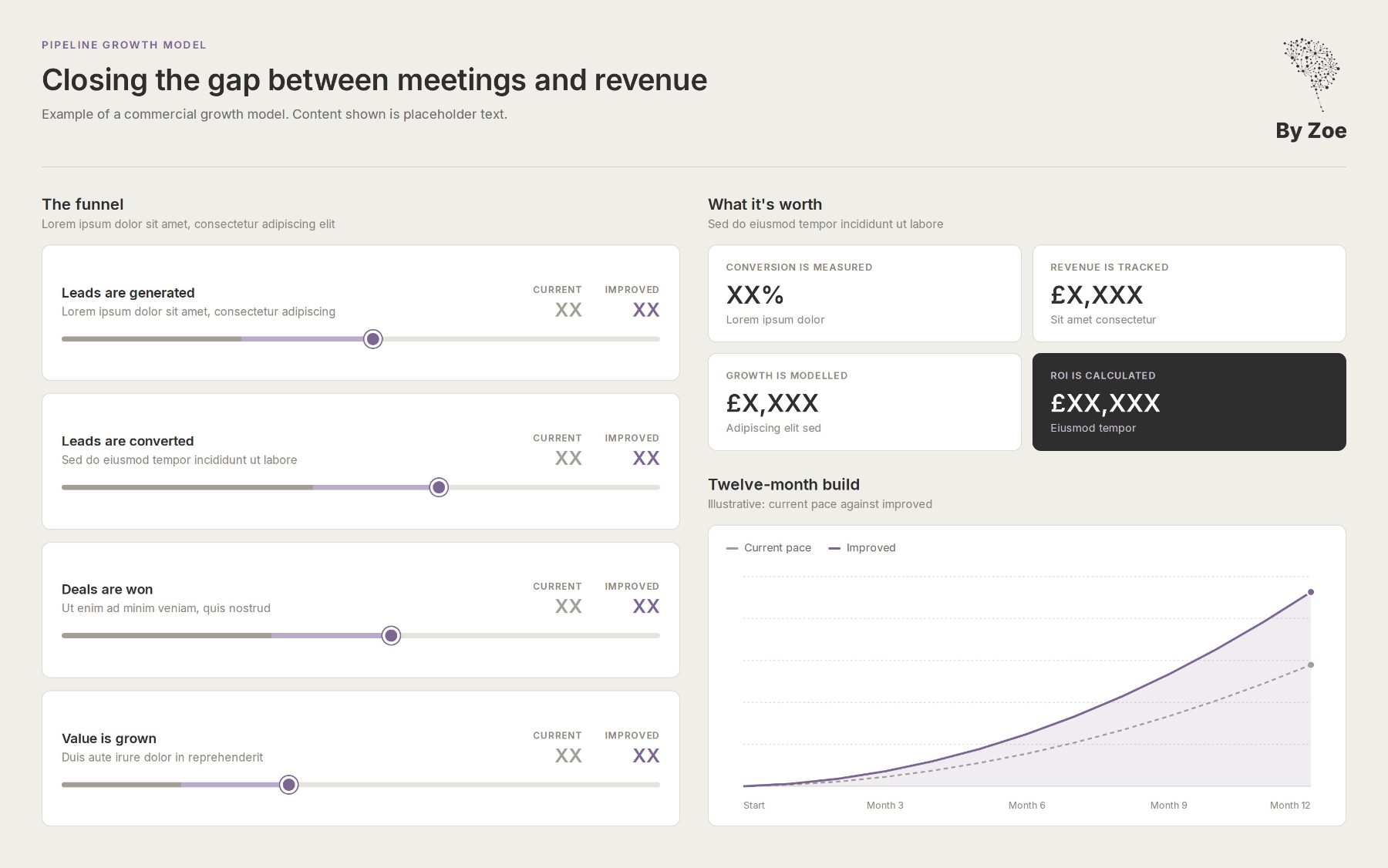
Sometimes the question is small. One number has moved in the wrong direction and nobody can say why. That can be a few hours' work — your numbers, my model, and a figure on what it's costing you over a year.
Sometimes it's bigger. Working out how a business actually makes money — pricing, conversion, where deals stall, what happens after the sale — takes four or five days.
Either way you get the same thing back: what's actually happening, what it's costing you, and what to do about it. You pay for the work it takes, not for a package you didn't need.
Most people don't know which one they need at the start. That's what the first piece of work is for.
Sometimes a lot of them. I need enough information to understand the problem properly before I tell you what I think.
A process, a target, a supplier, a structure, or an assumption everyone has stopped questioning.
Where we have numbers, I'll use them. Where we don't, I'll look for facts we can observe and test.
You're paying for my judgement, not for me to agree with everything.
If we agree something needs to change, I expect us both to do what we said we would to achieve the goals.
I work best with businesses that are prepared to look properly at what's happening and make changes when the evidence says they should.
You don't need to know exactly what the problem is before we start. You do need to be prepared to do something about it once we find it.
Anything from a few hours to about a week, depending on the question. One number that's moved in the wrong direction is short. Understanding how a whole business makes money takes days. We agree the scope before anything starts.
What's happening, what it's costing you, and what to do about it, in priority order, in plain English. Where there are numbers, they're in it. It isn't a strategy deck.
That's normal, and it's usually the point. You don't need to have diagnosed it before we start — you need to be ready to act on it once we find it.
Both, depending on what we agree. Some businesses want the diagnosis and will run the changes themselves. Others want me in it. I'll tell you honestly which one I think you need.
This site can use Google Analytics to count visits and see which pages get read. Nothing is stored on your device unless you agree. How the data is used